

Imagine walking into your home and feeling that perfect, just-right temperature every time. With a smart home temperature sensor, that dream becomes a reality. These little gadgets are like the thermostat’s cooler, tech-savvy cousin, constantly monitoring and adjusting your home’s climate while you kick back and relax.
Gone are the days of battling over the thermostat settings. Whether it’s a sweltering summer day or a chilly winter evening, these sensors work behind the scenes to keep everyone comfortable. Plus, they save energy and money, making your wallet feel as good as your living room. So, if you’re ready to transform your home into a cozy oasis, it’s time to dive into the world of smart temperature sensors.
Overview of Smart Home Temperature Sensors
Smart home temperature sensors operate by measuring indoor temperatures and sending data to other smart devices in real-time. These sensors automatically adjust heating and cooling systems based on temperature readings, creating a comfortable living environment. Energy efficiency increases as these devices help manage energy consumption, leading to reduced utility bills.
Many smart temperature sensors work with various smart home ecosystems. Compatibility with platforms like Amazon Alexa, Google Assistant, and Apple HomeKit enhances functionality and control. Homeowners can manage their temperature settings remotely through smartphones or tablets, ensuring a comfortable atmosphere at all times.
Sensors come with advanced features like humidity detection and programmable schedules. Humidity sensing aids in maintaining optimal humidity levels, preventing mold growth and improving air quality. Programmable schedules allow users to customize temperature settings based on daily routines, thus enhancing convenience.
Additionally, many models provide alerts when temperatures deviate from desired ranges. These notifications help prevent issues like freezing pipes or overheating systems, which can lead to costly repairs. Data logging capabilities also enable users to analyze temperature trends, allowing for informed decisions about energy use and comfort adjustments.
Integrating smart home temperature sensors enhances overall home automation. Improved indoor climate control contributes to better health and well-being. As technology advances, these sensors become more accessible and affordable, encouraging more people to consider their installation for modern living.
Types of Smart Home Temperature Sensors
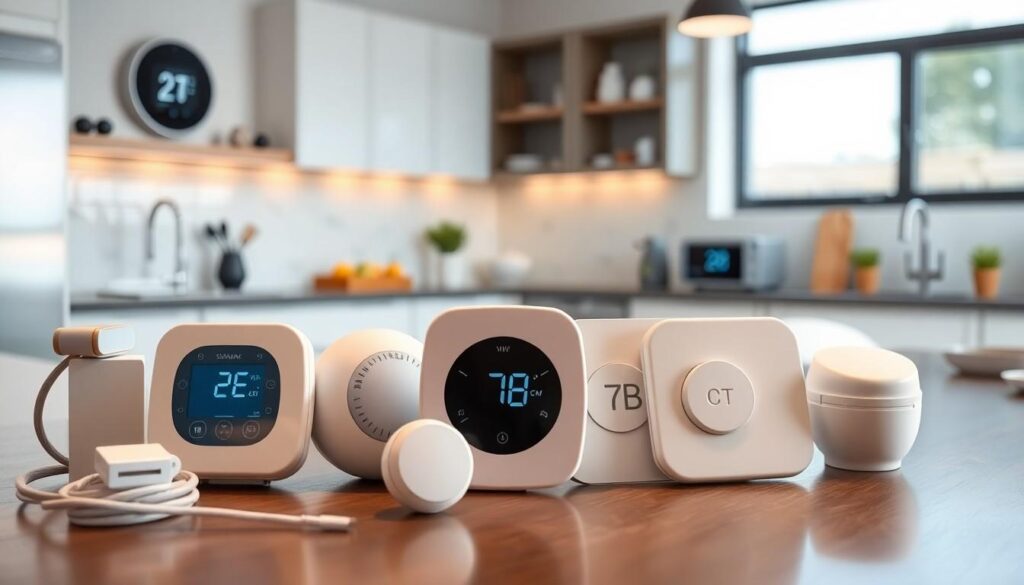
Smart home temperature sensors come in various types, each designed to cater to distinct needs. Understanding these types helps homeowners select the right option for their smart homes.
Wired vs. Wireless Sensors
Wired sensors connect directly to the home’s electrical system, providing reliable and stable readings. Installation requires running cables throughout the property, which can be labor-intensive. Wireless sensors offer flexibility and ease of installation. These battery-operated devices transmit data via Wi-Fi or Bluetooth, allowing placement in hard-to-reach spots. They often allow homeowners to easily relocate sensors without complicated wiring. Both types vary in data transmission ranges, impacting their effectiveness based on the home’s layout.
Contact vs. Non-Contact Sensors
Contact sensors measure temperature via direct contact with a surface. These devices typically work well in stable environments, like attics or basements. Non-contact sensors use infrared technology to detect temperature from a distance. They excel in dynamic environments where rapid temperature changes occur. Placement versatility matters; non-contact sensors can monitor multiple areas without installation, whereas contact sensors require specific placements for optimal performance. Each type has unique applications, making them valuable for different areas of smart home management.
Features to Consider
Smart home temperature sensors come with various features that significantly impact their performance and usability. Understanding these features ensures optimal selection for individual needs.
Accuracy and Sensitivity
Accuracy measures the ability of a sensor to reflect true temperature readings. High sensitivity enhances performance by detecting minute changes in temperature, crucial for maintaining comfort. Quality sensors often offer an accuracy of within ±0.5°F, making them reliable in different environments. Low-quality sensors might struggle with quick temperature shifts, leading to discomfort or inefficient heating and cooling. Optimal performance remains paramount, facilitating a stable and pleasant indoor environment.
Connectivity and Integration
Connectivity determines how well a smart temperature sensor interacts with other devices. Many sensors feature Wi-Fi or Zigbee connectivity, allowing seamless communication with smart home ecosystems. Integration with platforms like Amazon Alexa or Google Assistant enhances control, enabling voice commands for temperature adjustments. Automated routines improve efficiency, permitting adjustments based on schedules or occupancy. Compatibility with smartphone applications allows users to monitor conditions remotely, increasing convenience. Making informed choices about connectivity ensures users receive maximum benefits from their smart home systems.
Benefits of Using Smart Home Temperature Sensors
Smart home temperature sensors significantly improve both efficiency and comfort in residential spaces. These devices adapt to changing conditions and user habits seamlessly.
Energy Efficiency
Energy efficiency represents one of the key advantages smart temperature sensors provide. By continuously monitoring indoor temperature, these sensors adjust heating and cooling systems automatically. This process reduces waste by ensuring systems don’t overheat or cool spaces unnecessarily. Regular adjustments translate into lower energy consumption, which can lead to savings on utility bills. Furthermore, data from these sensors allow homeowners to identify temperature patterns, enabling them to tweak settings for optimal performance. Utility companies often report that homes with smart sensors enjoy a reduction of up to 20% in energy costs.
Enhanced Comfort and Convenience
Enhanced comfort and convenience significantly improve daily living. Smart temperature sensors create a stable indoor climate that aligns with personal preferences. Homeowners can access and modify temperature settings from smartphones or tablets, allowing for adjustments even when away. Moreover, programmable schedules enable sensors to align with daily routines effortlessly. For example, temperatures can be automatically set lower during the night and raised before wake-up times. In case of unexpected temperature changes, alerts notify the user, preventing discomfort. As a result, smart temperature sensors contribute to an environment that remains comfortable, regardless of external weather conditions.
Potential Drawbacks
Smart home temperature sensors come with specific drawbacks that homeowners should consider before purchasing. Examining these concerns helps in making informed decisions.
Cost Considerations
Investing in smart temperature sensors typically incurs higher initial costs compared to traditional thermostats. Quality devices can range from $30 to $300, depending on features. Homeowners may face additional expenses for installation, especially with wired sensors requiring professional help. While energy savings may offset some of these costs, substantial investment upfront could deter some buyers.
Security Concerns
Security risks accompany the convenience of smart temperature sensors. Data breaches can expose personal information transmitted over Wi-Fi networks. Unauthorized access to devices poses significant threats, as hackers could manipulate home systems. Not all sensors offer robust encryption, increasing vulnerability to cyberattacks. Homeowners must ensure devices from reputable brands utilize security features, as neglecting this aspect could lead to compromised safety.
Smart home temperature sensors significantly enhance comfort and energy efficiency in modern households. By providing real-time monitoring and automatic adjustments, these devices create a tailored living environment that meets individual preferences. Their compatibility with various smart home systems allows for effortless management and customization.
While the initial investment may be higher, the long-term savings on energy bills can make them worthwhile. Homeowners should weigh the benefits against potential drawbacks, including installation costs and security concerns. Choosing reputable brands with strong security features can help mitigate risks. Embracing smart temperature sensors is a step toward a more efficient and comfortable home.