

In a world where laptops often struggle to keep up with demanding games and graphics-intensive tasks, NVIDIA’s external graphics cards are like a superhero for your portable machine. Imagine boosting your laptop’s performance with the power of a desktop GPU, all while keeping your coffee cup close at hand. It’s the ultimate upgrade for gamers and creatives alike, transforming their everyday devices into powerhouse machines.
Overview of Nvidia External Graphics Cards
Nvidia external graphics cards provide significant performance enhancements for laptops, especially in gaming and graphical applications. These devices connect via Thunderbolt 3 or USB-C ports, allowing for fast data transfers and efficient processing. Users experience improved frame rates and graphics quality, making demanding games and applications more enjoyable.
Performance varies based on the specific Nvidia graphics card model used. Models such as the GeForce RTX series enable ray tracing and AI-enhanced graphics, delivering visually stunning experiences. External graphics enclosures often house these GPUs, offering additional ports for connectivity and cooling solutions.
Portability remains a key advantage. Users can easily transport external graphics cards, switching them between various laptops. This flexibility means they can enjoy high-performance setups without sacrificing the convenience of a laptop.
For creatives, Nvidia external graphics cards accelerate tasks such as video editing, 3D rendering, and graphic design. With enhanced computational power, these tools help professionals complete projects more efficiently. Many content creators rely on this technology to keep up with demanding software.
Compatibility is crucial when selecting an Nvidia external graphics card. Ensuring a laptop’s hardware can support the card is vital for optimal performance. Users should check compatibility with specific models and enclosures before making a purchase.
Cost also factors into the decision. Prices for external graphics cards and enclosures range widely based on specifications and capabilities. Users must consider their budget against their performance needs to find the right solution.
Benefits of Using Nvidia External Graphics Cards for Laptops
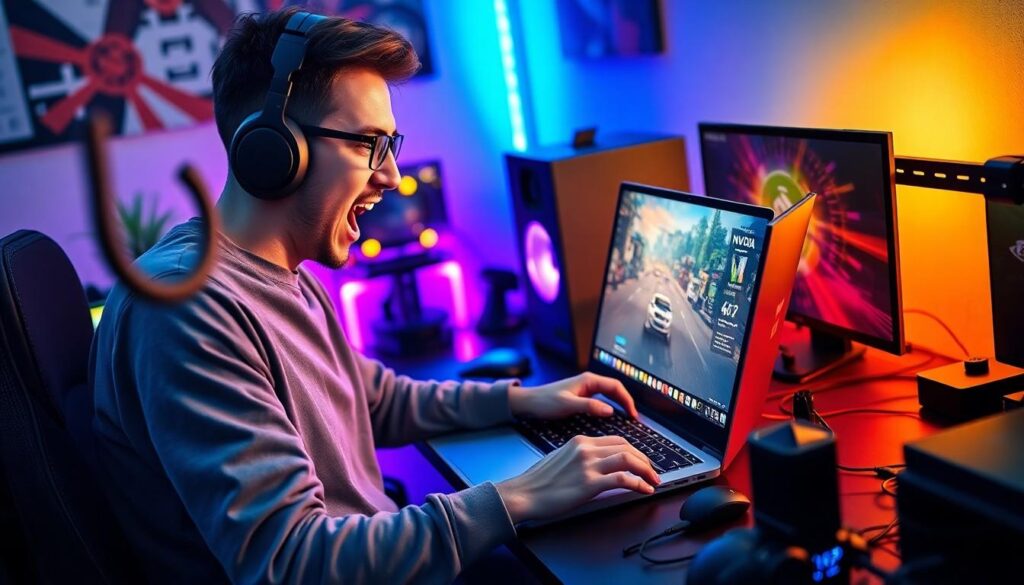
NVIDIA external graphics cards significantly enhance overall laptop performance, especially for gaming and creative applications.
Enhanced Gaming Performance
Enhanced gaming performance stands as a primary advantage of using NVIDIA external graphics cards. Users experience smoother gameplay with higher frame rates, particularly with the GeForce RTX series. Advanced features like ray tracing and AI enhancements elevate the visual quality of games. Players enjoy the luxury of running the most demanding titles without the limitations of their laptop’s built-in hardware. These external GPUs connect seamlessly through Thunderbolt 3 or USB-C ports, enabling rapid data transfers that minimize lag. Gamers easily switch between different setups, maintaining an optimal gaming experience wherever they are.
Improved Productivity for Creative Tasks
Improved productivity for creative tasks is another major benefit. Professionals in video editing, 3D rendering, and graphic design often rely on NVIDIA external graphics cards to streamline their workflows. Tasks that involve complex graphics processing become significantly faster and more efficient. External GPUs enable multitasking without crashing programs, allowing creatives to meet tight deadlines. The added power boosts rendering times, enabling professionals to produce high-quality content rapidly. Compatibility with various creative software ensures that users maximize the potential of these powerful graphics cards. Users ultimately gain the flexibility to work on resource-intensive projects without performance hindrances.
Compatibility with Various Laptop Models
Selecting an NVIDIA external graphics card requires careful consideration of compatibility. Users must ensure their laptop supports the necessary connection options and operates compatible software.
Connection Options and Requirements
Connection options play a critical role in compatibility. Typically, NVIDIA external graphics cards connect through Thunderbolt 3 or USB-C ports. Laptops need to feature at least one of these ports to leverage the full capabilities of the external GPU. It’s essential to check the laptop’s specifications prior to purchase. Additionally, some laptops might require a firmware update to optimize the graphics card’s performance. Ensuring the laptop has adequate power delivery for the GPU contributes to seamless integration and operation.
Supported Operating Systems
Supported operating systems vary among external graphics cards. Most NVIDIA external GPUs function seamlessly with Windows 10 and Windows 11. These operating systems provide the necessary drivers for optimal performance. Meanwhile, compatibility with macOS is limited and requires specific external enclosures to enable functionality. Users should verify compatibility for their operating system beforehand to avoid performance issues. Therefore, checking for the latest driver updates enhances the experience and ensures all features work correctly with the selected external GPU.
Popular Nvidia External Graphics Card Models
NVIDIA offers a variety of external graphics card models designed to enhance laptop performance significantly. Two prominent series, the GeForce GTX and GeForce RTX, cater to different user needs.
GeForce GTX Series
GeForce GTX series cards serve as a strong option for gamers seeking affordable performance. Users can expect solid frame rates across many popular titles, making these cards suitable for casual gaming and multimedia tasks. Offering reliable performance, the GTX line includes models like the GTX 1660 Ti, which balances power and cost effectively. This series focuses on traditional graphics processing without the advanced features of newer models, making it a practical choice for users on a budget. Portability remains a key feature, allowing users to easily switch these cards between devices.
GeForce RTX Series
GeForce RTX series cards deliver cutting-edge graphics and AI enhancements. Users benefit from capabilities such as real-time ray tracing, providing stunning visuals that elevate the gaming experience. Models like the RTX 3060 and RTX 3080 exemplify high performance and are ideal for demanding applications, including video editing and 3D rendering. These powerful options support advanced technologies that greatly improve graphics quality. Connecting via Thunderbolt 3 and USB-C ports ensures fast data transfer and compatibility with various laptops. The RTX series stands out for users seeking next-level performance for gaming and creative workloads.
Installation and Setup Guide
Installing an NVIDIA external graphics card enhances laptop graphics capabilities significantly. Begin by ensuring compatibility between the external GPU and the laptop. Verify connection options, focusing on Thunderbolt 3 or USB-C availability.
Gather essential components such as the GPU, enclosure, power supply, and cables. Connect the graphics card to the enclosure and secure it in place. Afterward, plug the enclosure’s power supply into an electrical outlet and power on the unit.
Using a Thunderbolt 3 or USB-C cable, connect the enclosure to the laptop’s corresponding port. Once connected, install the necessary drivers from NVIDIA’s official website. Installing the latest drivers ensures optimal performance and compatibility with modern applications.
Restart the laptop after driver installation for complete integration. Upon booting, the system should recognize the external GPU, allowing adjustment of graphics settings. Check the NVIDIA Control Panel to customize performance settings according to specific needs, like gaming or creative work.
For enhanced convenience, users can utilize software to monitor performance metrics. Monitoring tools provide real-time information on temperatures, usage, and performance stats. These insights help in maintaining optimal conditions and avoiding overheating issues during intensive tasks.
To maximize performance, adjust settings based on the applications used. Gaming often requires higher frame rates, while creative projects might benefit from enhanced rendering capabilities. Fine-tuning these settings ensures the most effective use of the external graphics card.
Finally, ensure regular driver updates to maintain performance and compatibility with new software releases. Staying current with updates helps avoid potential issues while enhancing overall functionality.
NVIDIA’s external graphics cards offer a powerful solution for laptop users seeking enhanced performance. With the ability to elevate gaming experiences and streamline creative workflows, these GPUs transform portable devices into high-performance machines.
Their compatibility with Thunderbolt 3 and USB-C ports ensures seamless integration, while models like the GeForce GTX and RTX series cater to varying needs and budgets.
Portability remains a standout feature, allowing users to switch setups without hassle. By investing in an NVIDIA external graphics card, users can unlock the true potential of their laptops, enjoying superior graphics and performance wherever they go.